Vitiligo

Vitiligo :

Multiple underlying factors 

Genetics 

Autoimmunity 

Trauma 

Chemicals 

Acute stress 

 Complete cure is possible 

if you come early  by treating underlying factors

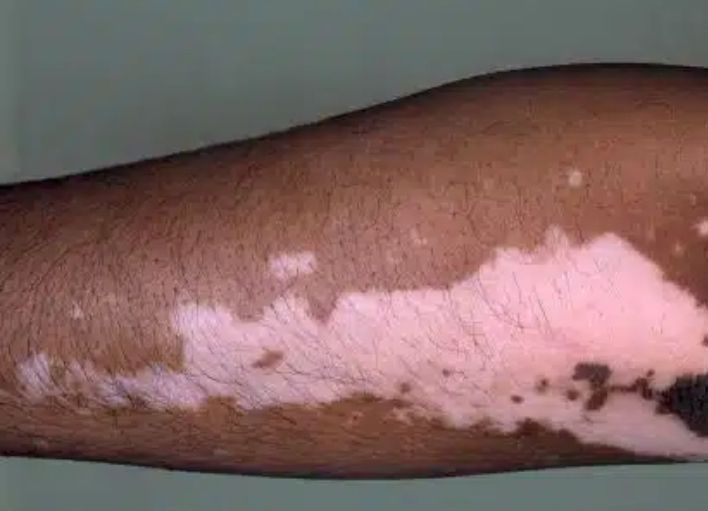
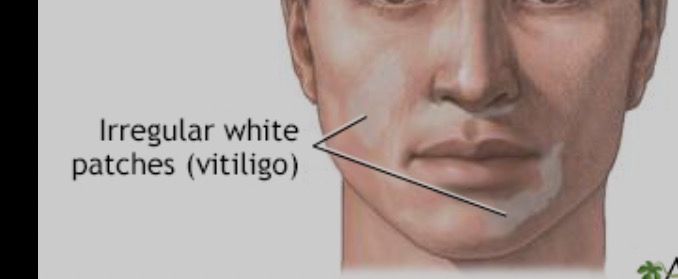
Vitiligo is a chronicautoimmune disorder that causes patches of skin to lose pigment or color

The cause of vitiligo:

Immune system changes, Genetic factors, Stress, Sun exposure susceptibility to it may be affected by regional environmental risk factors, especially early in life.

Treatment include

  • topical medications,
  • light therapy,
  • surgery and cosmetics.
  • Types : Segmental & Non segmental vitiligo, the common form, tends to progress, affecting more of the skin over time.
  • Classes of non-segmental vitiligo
  • Generalized vitiligo: the most common pattern
  • Universal vitiligo: depigmentation encompasses most of the body
  • Focal vitiligo: one or a few scattered macules in one area, most common in children
  • Acrofacial vitiligo: fingers and periorificial areas
  • Mucosal vitiligo: depigmentation of only the mucous membranes

Segmental vitiligo:

Segmental vitiligo (SV) differs in appearance, cause, and frequency of associated illnesses. Its treatment is different from that of NSV. It tends to affect areas of skin that are associated with dorsal roots from the spinal cord and is most often unilateral.38] It is much more stable/static in its course and its association with autoimmune diseases appears to be weaker than that of generalized vitiligo.SV does not improve with topical therapies or UV light; however, surgical treatments such as cellular grafts

Other conditions with similar symptoms :

  • albinism
  • halo nevus
  • idiopathic guttate hypomelanosis (white sunspots)
  • piebaldism
  • pityriasis alba
  • postinflammatory hypopigmentation
  • primary adrenal insufficiency
  • progressive macular hypomelanosis
  • tinea versicolor
  • tuberculoid leprosy
  • albinism
  • halo nevus
  • idiopathic guttate hypomelanosis (white sunspots)
  • piebaldism
  • pityriasis alba
  • postinflammatory hypopigmentation
  • primary adrenal insufficiency
  • progressive macular hypomelanosis
  • tinea versicolor
  • tuberculoid leprosy

Treatment options:

  • Immune mediators
  • Phototherapy
  • Skin camouflage
  • Surgery