Sign Up to get updates & news about us . Get Latest Deals from Walker's Inbox to our mail address.
PRP (Platelet-Rich Plasma) therapy is a potential treatment for hair loss using patient’s own blood to stimulate hair follicles and promote hair growth.
Studies suggest PRP can be effective for androgenetic alopecia (male and female pattern baldness) and other types of hair loss.
1.Blood Draw: A small amount of blood is drawn from the patient, similar to a routine blood test.
2. Centrifugation: The blood is placed in a centrifuge to separate the components: platelet-rich plasma, platelet-poor plasma, and red blood cells.
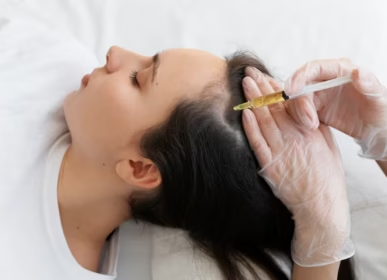
3. Injection: The platelet-rich plasma, containing growth factors, is injected into the scalp in areas experiencing hair thinning or loss.
* Promotes Hair Growth: PRP injections can stimulate hair follicles, potentially leading to increased hair growth and density.
* May Improve Hair Thickness: Studies have shown that PRP can increase hair thickness and improve overall hair quality. a good option for early-stage hair loss: It can be particularly effective for those experiencing early-stage hair loss (Norwood grade I or II) or hair thinning.
* Relatively safe: As it uses the patient’s own blood, the risk of allergic reactions is low.
* Regular Intervals: PRP therapy typically requires multiple sessions spaced out over several months to maintain results.
* Follow-up: Maintenance treatments are often recommended to sustain the effects of PRP therapy.
* Individual Results Vary: The effectiveness of PRP can vary depending on the individual, the type of hair loss, and other factors.
* Not a Cure: PRP is not a cure for hair loss .
* Studies have shown that PRP can be an effective treatment for hair loss, particularly androgenetic alopecia.
* Some studies indicate that PRP can improve hair density, thickness, and growth.
* PRP can also be used to stimulate hair growth after hair transplants.